
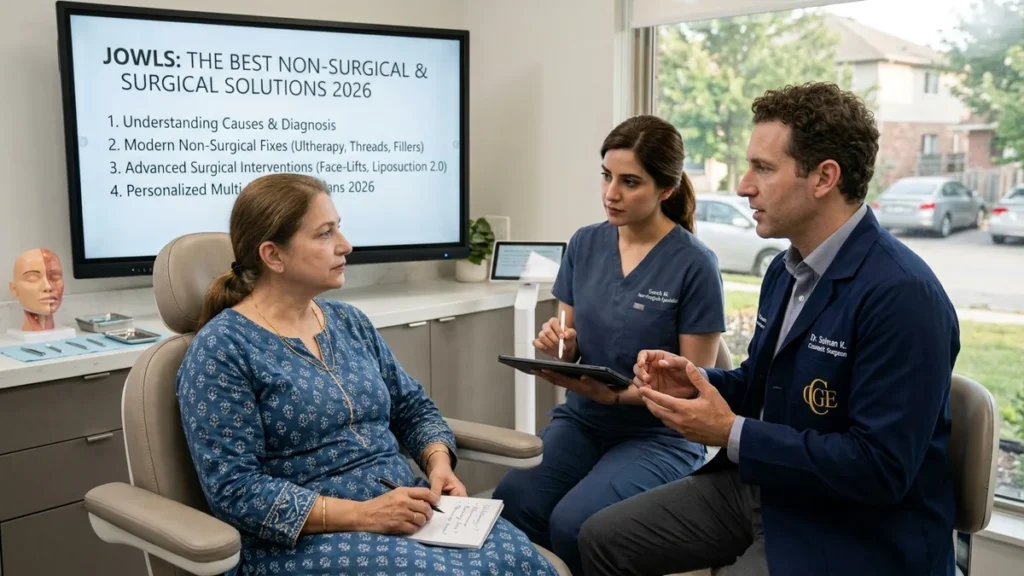
The first time I noticed the subtle sagging along my jawline, I felt a wave of concern. In my analysis of this common aging concern, I have found that jowls are one of the most frequent cosmetic complaints among people over 40, yet there is a great deal of confusion about what actually causes them and what can be done. From my perspective, understanding the science behind jowls is the first step toward effectively managing them.
Based on the available evidence, jowls refer to the sagging skin and tissue that develop along the jawline as we age. They occur when the skin loses its structural support, causing the cheeks to droop and creating folds or “jowls” below the chin. Let us consider the full scope of what causes this condition, how to prevent it, and the range of treatment options available in 2026, from simple lifestyle changes to advanced medical procedures.
Executive Summary: What You Need to Know About Jowls
| Aspect | Key Information |
|---|---|
| What Are Jowls | Sagging skin and tissue along the jawline caused by loss of collagen and elastin |
| Primary Causes | Aging, genetics, sun damage, smoking, and lifestyle factors |
| Prevention | Sunscreen, retinoids, healthy lifestyle, facial exercises |
| Non-Surgical Treatments | Ultherapy, radiofrequency, fillers, PRP, thread lifts |
| Surgical Treatments | Facelift, neck lift, lower facelift |
| At-Home Care | Facial exercises, massage, skincare with retinoids and vitamin C |
| Best Prevention Age | Start in your 20s and 30s with sunscreen and retinoids |
In my view, the most important takeaway is that while jowls are a natural part of aging, you are not powerless against them. A combination of preventive skincare, healthy habits, and, if desired, professional treatments can significantly improve or delay their appearance.
What Are Jowls? Understanding the Anatomy of Sagging
Jowls are not simply excess fat or loose skin. They represent a complex structural change in the face. As we age, the skin’s foundational proteins, collagen and elastin, break down. This process creates a loss of volume and support, causing the skin and underlying tissues of the cheeks to descend and gather along the jawline.
The primary cause of jowls is the natural aging process. Production of collagen and elastin slows down dramatically as we get older. This loss of elasticity means the skin can no longer hold its shape against the constant pull of gravity. Additionally, the fat pads in the cheeks, which provide youthful volume, diminish and shift downward. The combination of thinner, less elastic skin and lost volume creates the characteristic folds and sagging we recognize as jowls.
The Main Causes of Jowls
Based on my research, several factors contribute to the development of jowls. Understanding these causes is crucial for both prevention and treatment.
1. The Natural Aging Process
The most significant factor is simply getting older. As we age, our bodies produce less collagen and elastin. This decline typically accelerates in our 40s and 50s, which is when jowls often become noticeable. The skin becomes thinner and less resilient, making it more susceptible to gravitational forces.
2. Genetics
Genetics play a substantial role in determining when and how severely you will develop jowls. If your parents had noticeable jowls, you may be more predisposed to them. Genetics influence your skin’s natural collagen and elastin levels, as well as the structure of your facial bones, which provides support for the skin.
3. Sun Damage
Chronic sun exposure is one of the most preventable causes of premature aging and jowl formation. Ultraviolet (UV) rays break down collagen and elastin fibers in the skin, accelerating the sagging process. Over time, this damage accumulates and makes the skin appear much older than it actually is.
4. Lifestyle Factors
Certain habits can speed up the aging process and contribute to jowls. Smoking reduces blood flow to the skin, depriving it of oxygen and nutrients, and damages collagen and elastin. Poor diet, chronic stress, lack of sleep, and dehydration can also accelerate skin aging.
5. Weight Fluctuations
Significant weight gain and loss can stretch the skin and affect its elasticity. Gaining weight can increase the volume of fat in the face, while losing weight can create excess, loose skin that contributes to sagging.
Prevention: How to Delay the Onset of Jowls
While you cannot stop the aging process entirely, you can take proactive steps to slow it down and minimize the appearance of jowls. In my view, the most effective approach is to start early and be consistent.
Start Early with Sun Protection
The single most important preventive measure is daily sun protection. A board-certified dermatologist advises that people in their 20s and 30s should focus on “maintaining the couch before the cushions start sinking,” which means consistently protecting collagen. Use a broad-spectrum sunscreen with SPF 30 or higher every day, all year round. This is one of the most powerful tools to prevent collagen breakdown.
Use Retinoids and Antioxidants
Incorporating a retinoid (a vitamin A derivative) into your nighttime skincare routine can significantly improve skin firmness and stimulate collagen production. Retinoids work by increasing cell turnover and promoting the production of new collagen. Additionally, using vitamin C and other antioxidants in the morning can protect the skin from environmental damage and support collagen health.
Adopt a Healthy Lifestyle
Lifestyle choices have a direct impact on skin health. Avoid smoking, as it accelerates collagen breakdown. Maintain a balanced diet rich in antioxidants and nutrients that support skin health. Stay hydrated, manage stress, and prioritize quality sleep. All of these factors contribute to the overall vitality of your skin.
Consider Facial Exercises
The role of facial exercises in preventing or reducing jowls is a topic of debate. Some experts believe that exercises can help by toning the underlying muscles and improving circulation. Others suggest that their impact is minimal. However, gentle facial massage and yoga can temporarily improve circulation and reduce puffiness. If you are interested, exercises like chin tucks, neck stretches, and “kissing the ceiling” may be worth exploring.
Avoid Sleeping on Your Side
Sleeping on your side can contribute to the formation of “pillow creases,” which over time may become more pronounced. Sleeping on your back can help reduce this pressure and may help prevent creases that could make jowls appear more defined.
At-Home and Non-Surgical Treatment Options
For those who already have jowls, there is a range of options. In my analysis, the approach you choose depends on the severity of your jowls and your personal preferences.
Skincare and Topical Treatments
For mild jowls, a consistent skincare regimen can support firmer-looking skin and slow further decline. This regimen should include prescription-strength retinoids, growth-factor-based formulations, and daily sunscreen. These ingredients work together to preserve existing collagen and improve skin texture over time. Consistent use of peptides, retinoids, and vitamin C can significantly improve skin quality and collagen production.
Energy-Based Skin Tightening
Ultherapy
Ultherapy is a non-invasive procedure that uses ultrasound energy to lift and tighten the skin along the jawline. It targets the deeper layers of the skin, including the SMAS layer (the tissue that surgeons tighten during a facelift), to stimulate collagen production. It is a popular choice for individuals with mild to moderate skin laxity.
Sofwave
Sofwave is another non-surgical treatment that uses ultrasound technology to improve skin laxity, reduce jowls, and define the jawline. It is a versatile treatment that can also address sagging cheeks and loose skin under the chin.
Radiofrequency and Laser Treatments
Other energy-based devices, such as radiofrequency (RF) and fractional CO2 lasers, can tighten skin and improve its quality. These treatments work by heating the deeper layers of the skin, stimulating collagen remodeling and contraction.
Injectable Treatments
Dermal Fillers
Fillers, such as Juvederm Volux, can be used to restore lost volume and support the jawline. When strategically placed, they can lift sagging tissues and create a more defined contour. Results typically last between 6 to 18 months.
Biostimulators
Biostimulator injections, such as those containing calcium hydroxylapatite, work by stimulating your body’s own collagen production. They provide a gradual, natural-looking improvement over several months.
Platelet-Rich Plasma (PRP)
PRP therapy uses your own blood’s growth factors to stimulate collagen and elastin production. This minimally invasive treatment offers subtle jawline definition for mild to moderate sagging.
Neuromodulators (Botox)
Botox can be injected into specific muscles that pull the corners of the mouth downward, which can contribute to the appearance of jowls. This treatment can soften the downward pull and create a subtle lift.
Thread Lifts
A thread lift involves inserting temporary sutures under the skin to physically lift and reposition sagging tissue. This is a minimally invasive procedure that can provide an immediate lift with minimal downtime.
Surgical Treatment Options
For individuals with more significant jowls, surgical procedures offer the most dramatic and long-lasting results.
Facelift (Rhytidectomy)
A facelift is the gold standard for correcting jowls. It involves surgically lifting and repositioning the underlying tissues of the face and neck, removing excess skin, and redraping it for a more youthful contour. This procedure can effectively eliminate deep folds and sagging along the jawline.
Neck Lift
A neck lift is often performed in conjunction with a facelift to address sagging skin and muscle banding in the neck area. This can further enhance the jawline and overall facial profile.
Lower Facelift
A lower facelift specifically targets the lower third of the face, including the jowls, nasolabial folds, and sagging skin along the jawline. It is a more focused procedure than a full facelift.
Comparison of Treatment Options for Jowls
| Treatment | Type | Downtime | Results Duration | Best For |
|---|---|---|---|---|
| Skincare (Retinoids, SPF) | At-home | None | Ongoing with use | Prevention and mild cases |
| Ultherapy | Non-invasive | None | 1-2 years | Mild to moderate laxity |
| Sofwave | Non-invasive | None | 1-2 years | Mild to moderate laxity |
| Dermal Fillers | Minimally invasive | Minimal | 6-18 months | Volume loss and mild sagging |
| PRP Therapy | Minimally invasive | Minimal | 1-2 years | Mild to moderate laxity |
| Thread Lift | Minimally invasive | 1-2 weeks | 1-2 years | Moderate sagging |
| Facelift | Surgical | 2-4 weeks | 5-10+ years | Significant sagging and jowls |
In my view, the best approach is to start with prevention and at-home care, and then consider professional treatments based on the severity of your jowls and your goals. A consultation with a board-certified dermatologist or plastic surgeon can help you determine the most suitable options.
Frequently Asked Questions
What are jowls?
Jowls are the sagging skin and tissue that develop along the jawline as we age. They are caused by a loss of collagen and elastin, which reduces skin elasticity and firmness, combined with the effects of gravity and the shifting of facial fat pads.
What causes jowls?
The primary cause of jowls is the natural aging process, which leads to a decrease in collagen and elastin production. Genetics, sun damage, smoking, and lifestyle factors can accelerate the development of jowls.
Can you prevent jowls?
While you cannot completely prevent jowls, you can delay their onset and minimize their appearance. Key preventive measures include daily sunscreen use, using retinoids, maintaining a healthy lifestyle, and avoiding smoking.
What are the best treatments for jowls?
Treatment options range from at-home skincare with retinoids and sunscreen, to non-surgical procedures like Ultherapy and dermal fillers, to surgical options like a facelift. The best treatment depends on the severity of your jowls and your personal goals.
Do facial exercises help with jowls?
Facial exercises may help improve circulation and temporarily reduce puffiness. However, their effectiveness in significantly reducing jowls is limited, and they are not considered a primary treatment option.
At what age do jowls typically appear?
Jowls often become noticeable in a person’s 40s or 50s, when collagen and elastin production declines significantly. However, genetics and lifestyle factors can cause them to appear earlier or later.
Is a facelift the only way to fix jowls?
No, a facelift is not the only option. Non-surgical treatments like Ultherapy, Sofwave, dermal fillers, and thread lifts can effectively address mild to moderate jowls. A facelift is typically recommended for more significant sagging.
Conclusion
Throughout this exploration of jowls, I have found that while they are a natural part of the aging process, there are many effective strategies to manage them. The practical lesson is that prevention through daily sun protection and a healthy lifestyle is the most powerful tool you have. For those who already have jowls, a wide range of treatments—from simple skincare to advanced medical procedures—can help restore a more youthful jawline.
I believe the central insight is that jowls are not just about skin; they reflect a combination of collagen loss, volume depletion, and gravitational changes. Addressing them effectively often requires a multi-faceted approach that combines prevention, at-home care, and, if desired, professional intervention.
From my perspective, the most important step is to be proactive. Whether you are in your 20s focusing on prevention or in your 50s exploring treatment options, there are solutions available that can help you feel more confident. For those interested in exploring more about health, wellness, and skincare, resources like those available at WordPlay-2018 can provide additional insights.
Sources
- Dr. Dominic Bray. “How To Reduce Sagging Jowls.” 2026.
- Dr. Dominic Bray. “How To Get Rid Of Jowls | List of Treatment Options.” 2026.
- Weber Facial Plastic Surgery. “WHAT CAUSES JOWLS, AND WHAT CAN BE DONE ABOUT THEM?” 2026.
- Woman and Home Magazine. “How to address jowls – from skincare to surgical solutions.” 2026.
- Krauss Dermatology. “Ultherapy for Loose Skin and Jowls.” 2026.
- Ubie Health. “Tighten Jawline Fast: Can PRP Lift Sagging Skin?” 2026.
- Dr. Michele Green. “Juvederm Volux, Jawline Definition Filler.” 2026.
- Dr. Gorodisky. “Sofwave: The Non-Surgical Lift Everyone Is Talking About.” 2026.
- Riverbanks Clinic. “Best Ways to Lift Jowls Naturally and Medically.” 2026.
- Remedy Skin. “The Truth About Jowls (And What Actually Works).” 2026.
- Fox News. “The real reason for sagging jowls, and what will and won’t help.” 2026.
- Dr. Anatalia Aesthetics. “The best Filler free ways to treat jowling.” 2026.
- The Skin Real. “Why You Have Sagging Jowls — and What Actually Improves Them.” 2026.
- Healthgrades. “What Are Jowls? All Your Treatment Options Explained.” 2022.
- Healthline. “Jowls: Causes, Treatment, Prevention and More.” 2017.
- Define Clinic. “Jowls: Causes, treatment and prevention.” 2021.
- Weber Facial Plastic Surgery. “Does a neck lift get rid of jowls?” 2026.
- Mayo Clinic News Network. “Nip and Tuck: Older Adults Opt for Cosmetic Surgery.” 2012.
- Healthline. “All About Jaw Fillers.” 2020.
- Healthline. “Thread Lift: What to Expect, Cost, Recovery, and More.” 2020.
Disclaimer
This article provides general information about jowls for informational and educational purposes. The analysis is based on available public information and may not reflect the most current medical guidelines or practices. This article does not constitute medical advice, and readers should consult qualified healthcare professionals for guidance on specific health concerns. The views expressed are those of the author based on available evidence. Always seek the advice of your physician or other qualified health provider with any questions you may have regarding a medical condition.

Faizullah Baig
Entertainment & Digital Culture Writer at WordPlay2018
Faizullah Baig is a writer at WordPlay2018 covering entertainment, celebrity news, movies, television, pop culture, and digital trends.
His work focuses on explaining current entertainment stories in a clear and reader-friendly way, with attention to the details behind trending headlines.
Areas of Coverage
Faizullah primarily covers:
Celebrity news and profiles
Movies and television
Entertainment industry developments
Celebrity relationships and public appearances
Trending pop-culture stories
Digital culture and online trends
Editorial Approach
Faizullah aims to distinguish confirmed information from reports, estimates, and speculation. For developing stories, information may be updated as additional reliable details become available.
Articles published under his name are intended to provide readers with useful context rather than simply repeat a headline or social-media claim.
Contact
For corrections, questions, or feedback about an article published under Faizullah Baig’s name, please contact:
Publication: WordPlay2018
Role: Entertainment & Digital Culture Writer