BuckViz Boots: Waterproof Hi-Vis Safety Boots Guide
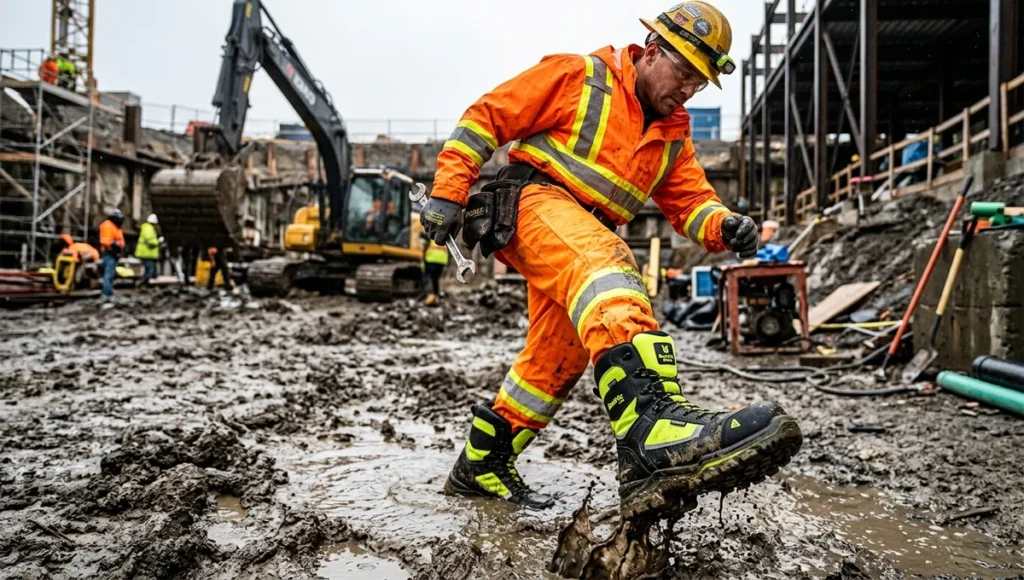
When I look at a safety boot, I do not focus on appearance alone. Instead, I want to know whether it can handle wet ground, long working hours, poor visibility, mud, and the everyday wear that comes with demanding outdoor work. That is where BuckViz Boots become particularly interesting.
BuckViz, also marketed within the Buckbootz range as Buckzviz, combines high-visibility materials with waterproof construction and workplace safety features. The current range includes several styles, including lace boots, high-leg lace/zip boots, dealer boots and the FITGO system boot. Buckbootz lists the range for sectors such as construction, agriculture, engineering, maintenance, trades and utilities.
Moreover, these boots combine several features that outdoor workers commonly look for. Depending on the model, you can find waterproof membranes, reflective detailing, composite safety toes, anti-penetration protection, slip resistance, heat-resistant outsoles and fuel-oil resistance.
Therefore, if you are searching for waterproof hi-vis safety boots, this guide explains what BuckViz offers, how its main styles differ, and what I would check before buying a pair.
What Are BuckViz Boots?
BuckViz is a high-visibility safety boot range from Buckbootz designed for workers who need a combination of visibility, weather protection and occupational foot protection.
Rather than being one single boot, the Buckzviz range contains several different designs. For example, the current collection includes the BVIZ1 high-leg lace/zip boot, BVIZ2 lace boot, BVIZ3 dealer boot and BVIZ7 FITGO system boot.
Consequently, buyers can choose a style based on how they work rather than simply choosing a boot because it carries the BuckViz name.
| BuckViz feature | What it means for the wearer |
|---|---|
| Waterproof construction | Helps protect feet during wet working conditions |
| Hi-vis materials | Makes the boot more visible in working environments |
| Reflective detailing | Adds visibility in low-light conditions |
| Composite safety toe | Provides non-metallic toe protection on listed models |
| Anti-penetration midsole | Helps protect against sharp objects from underneath |
| Slip-resistant outsole | Provides additional grip on potentially slippery surfaces |
| Heat resistance | Useful for work environments requiring a heat-resistant outsole |
| Fuel-oil resistance | Useful for certain industrial and outdoor environments |
The official Buckbootz range currently lists waterproofing, S7 safety classification, slip resistance, fuel-oil resistance, heat resistance, ladder grip and anti-penetration protection across the Buckzviz collection.
Why Waterproof Hi-Vis Boots Matter
For outdoor workers, waterproofing and visibility solve different problems.
First, waterproofing is primarily about keeping feet dry when workers encounter rain, wet ground, mud or standing water. Meanwhile, visibility is about helping workers remain noticeable in environments where lighting, traffic or surrounding activity can make them harder to see.
That combination can be useful in construction, roadwork, utilities, agriculture, engineering, maintenance and other outdoor occupations.
For example, OSHA has published guidance concerning high-visibility warning garments in highway construction environments, illustrating why visibility can be an important workplace consideration in certain settings. However, specific PPE requirements depend on the work environment and applicable rules.
Therefore, a hi-vis safety boot should be considered part of a wider PPE setup rather than a replacement for other required protective equipment.
Are BuckViz Boots Waterproof?
This is one of the most important questions behind the search for BuckViz Boots.
The current Buckzviz range is listed by Buckbootz as waterproof, with the collection carrying the WR waterproof specification. Buckbootz explains that its waterproof leather safety footwear uses an internal waterproof membrane designed to keep feet dry while allowing breathability and moisture dissipation.
Furthermore, Buckbootz says its waterproof models undergo flex testing in a water tank, with the vamp area submerged past the toe cap and testing continuing for at least 15,000 flexes without leakage.
That is useful information because waterproof and water-resistant are not interchangeable terms.
Buckbootz itself distinguishes its waterproof S7/WR footwear from water-resistant S3/WPA styles. Therefore, I would always check the exact specification of the model rather than assuming that every safety boot from the same brand has identical waterproof performance.
BuckViz Safety Features Explained
One reason the range attracts attention is that visibility is only one part of its design.
Composite Safety Toe
Several Buckzviz models use a composite safety toe rather than a conventional steel toe.
For instance, the BVIZ1 specification lists a composite safety toecap, while the current BVIZ7 FITGO model also lists composite toe protection.
A composite toe can be useful for workers who specifically want non-metallic safety footwear.
Anti-Penetration Protection
The range also includes a non-metallic NAIL STOP anti-penetration midsole on listed models.
This feature is designed to provide protection against sharp objects penetrating through the sole area. Therefore, it can be particularly relevant to construction, groundwork, agriculture and other environments where workers may encounter nails, screws or other sharp debris.
Slip Resistance
Slip resistance is another important consideration.
Wet surfaces, mud, oil and uneven ground can all affect traction. Consequently, a suitable outsole becomes an important part of a work boot rather than merely a comfort feature.
Buckbootz lists slip resistance across the Buckzviz range, while individual models can also include ladder grips.
Heat and Fuel-Oil Resistance
Some Buckzviz specifications also include heat and fuel-oil resistance.
For example, the BVIZ7 FITGO system boot carries HRO heat resistance and FO fuel-oil resistance in its listed safety code. Its rubber outsole is also described as heat, oil and slip resistant.
However, I would not choose a boot simply because it has a longer feature list. Instead, the protection should match the actual hazards of the job.
BuckViz Boots Models Compared
One of the easiest ways to understand the range is to compare its main styles.
| Model | Style | Notable features | Potential use |
|---|---|---|---|
| BVIZ1 | High-leg lace/zip | Waterproof, reflective details, composite toe, anti-penetration protection | Outdoor trades and demanding work |
| BVIZ2 | Lace boot | Waterproof, 360° visibility, composite toe, slip resistance | General outdoor work |
| BVIZ3 | Dealer boot | Waterproof elastic sides, reflective detailing, composite toe | Workers wanting easy pull-on access |
| BVIZ5 | Rigger boot | Hi-vis design and additional protection on listed specification | Agriculture, construction and outdoor trades |
| BVIZ7 | FITGO system boot | FITGO lacing, 360° visibility, ladder grip, heat and oil resistance | Demanding construction and industrial work |
Buckbootz currently identifies sectors including agriculture, construction, engineering, maintenance, trades and utilities for its Buckzviz range.
However, these suggested sectors should not be interpreted as a guarantee that every model is suitable for every job. The actual safety requirements of the workplace should always come first.
BVIZ1 vs BVIZ2: Which Style Makes More Sense?
If I were comparing the BVIZ1 and BVIZ2, I would focus mainly on the boot design and how it fits the working environment.
The BVIZ1 is a high-leg lace/zip design. It combines laces with a heavy-duty YKK side zipper, so the wearer can adjust the boot while still getting easier access when putting it on or taking it off. Buckbootz also lists waterproof construction, reflective detailing, a composite safety toe and anti-penetration protection for the model.
By comparison, the BVIZ2 is a conventional lace boot. It retains the waterproof and hi-vis approach but has a simpler boot profile. The current specification includes composite toe protection, anti-penetration protection, slip resistance and reflective features.
Therefore, someone who wants additional coverage from a high-leg design may prefer the BVIZ1 style. On the other hand, someone who prefers a conventional lace-up safety boot may find the BVIZ2 more suitable.
You should also know about Boots With Ducks: Styles, Designs, and Buying Tips
What About the BuckViz Dealer Boot?
The BVIZ3 takes a different approach.
Instead of traditional laces, this style uses elastic sides. As a result, it can be easier to put on and remove during a busy working day.
The official Buckbootz brochure describes the BVIZ3 as a waterproof dealer boot with waterproof elastic sides, reflective inserts and 360-degree visibility. It also includes composite toe protection, anti-penetration protection, slip resistance and other listed safety features.
That makes the style particularly interesting for workers who value convenience.
Nevertheless, there is a trade-off in boot design. A lace-up boot allows more adjustment around the foot and ankle, whereas a dealer boot prioritizes easy access.
What Makes the BuckViz FITGO Boot Different?
The BVIZ7 FITGO system boot is one of the more distinctive options in the current range.
Instead of conventional laces alone, it uses a FITGO wheel and cable lacing system. The product specification also lists 360-degree visibility, waterproof protection, a composite safety toe, NAIL STOP anti-penetration protection, ladder grip, slip resistance, heat resistance and fuel-oil resistance.
In addition, the boot combines cowhide leather, Cordura and a hi-vis TPU component. The outsole is designed for slip, heat and oil resistance and includes ladder grips.
Consequently, the BVIZ7 may appeal to workers who want a more modern fastening system alongside a broad range of protective features.
Are BuckViz Boots Suitable for Construction Work?
Yes, construction is one of the sectors Buckbootz specifically associates with the Buckzviz collection. The company also lists agriculture, engineering, groundwork, roadwork, utilities, maintenance and other sectors across its range.
However, I would not choose a construction boot simply because the manufacturer lists “construction” as a suggested sector.
Instead, I would first consider the actual hazards at the worksite.
For example, a construction worker may need to consider:
- Toe protection requirements
- Puncture or penetration risks
- Slip hazards
- Heat exposure
- Oil or fuel exposure
- Water and mud
- Ankle support
- Ladder use
- Required visibility standards
- Employer-specific PPE rules
Therefore, the correct question is not simply, “Are BuckViz Boots good for construction?”
A better question is:
Does the exact BuckViz model provide the protection required for my particular construction environment?
That approach makes the buying decision much more practical.
How Comfortable Are BuckViz Boots?
Comfort is more difficult to judge from specifications alone.
After all, foot shape, sizing, socks, working hours and personal preference can all affect how a safety boot feels.
Buckbootz lists cushion insoles on several Buckzviz models and describes features intended to improve comfort. The BVIZ1, for example, includes a comfort insole and contoured collar, while the BVIZ2 specification includes a padded collar and extended heel counter.
Still, specifications cannot tell me exactly how a boot will feel after eight hours on a particular person’s feet.
Therefore, if you spend long working days in safety boots, I would pay attention to:
- Correct sizing
- Toe-room
- Heel movement
- Ankle pressure
- Overall boot weight
- Breathability
- Sock compatibility
- Sole flexibility
- Foot shape and width
A waterproof safety boot can have excellent protection, but if it creates pressure points after a few hours, it may not be the right choice for that wearer.
How to Maintain Waterproof BuckViz Boots
Even a waterproof boot benefits from regular maintenance.
Buckbootz’s current care guidance recommends removing dirt regularly, drying boots naturally at room temperature and using care products appropriate for the material. For example, the company recommends different treatments for leather, nubuck, rubber/neoprene and hi-vis Cordura.
In particular, I would avoid placing wet safety boots directly against a radiator or another intense heat source.
Instead, a simple maintenance routine can be:
- Brush off dried mud.
- Clean the upper using a suitable method.
- Allow the boots to dry naturally.
- Inspect the sole for excessive wear.
- Check the upper and stitching.
- Inspect reflective sections.
- Reapply an appropriate protective treatment when required.
Moreover, Buckbootz recommends reproofing footwear when water stops beading on the surface.
Of course, maintenance cannot restore a seriously damaged safety boot. Therefore, worn or damaged footwear should be replaced according to the manufacturer’s guidance and workplace requirements.
What Should You Check Before Buying BuckViz Boots?
Before buying, I would focus less on the name and more on the exact model specification.
1. Check the Safety Rating
First, look at the EN ISO 20345 classification and the individual protection codes listed for the model.
The current Buckzviz collection carries S7 specifications, while individual models can have additional codes such as SC, SR, HRO, FO, LG and WR.
2. Confirm Waterproofing
Next, confirm whether the exact boot is certified as waterproof.
As noted earlier, Buckbootz distinguishes waterproof WR footwear from water-resistant WPA footwear. Therefore, do not rely solely on the word “waterproof” appearing in a general product description.
3. Choose the Right Style
Then decide which design actually fits your working routine.
You can consider:
- High-leg lace/zip
- Standard lace
- Dealer
- Rigger
- FITGO system
4. Consider Your Working Environment
After that, think about where the boots will be used.
Construction, agriculture, utilities, maintenance and warehouse work can expose workers to very different conditions.
5. Check the Fit
Next, check sizing carefully.
A safety boot should feel secure without crushing the toes or creating excessive pressure around the heel and ankle.
6. Look at the Outsole
Finally, consider the outsole properties.
If your work involves ladders, wet surfaces, oil or heat, check whether the exact model has the relevant properties rather than assuming every BuckViz boot is identical.
BuckViz Boots: Pros and Considerations
| Potential advantages | Things to check |
|---|---|
| Waterproof models | Exact waterproof specification |
| High-visibility construction | Workplace visibility requirements |
| Reflective detailing | Condition of reflective areas |
| Composite safety toe | Required toe protection |
| Anti-penetration protection | Exact midsole specification |
| Slip-resistant soles | Actual surface hazards |
| Multiple boot styles | Fit and personal preference |
| Heat-resistant options | Whether heat protection is needed |
| Fuel-oil-resistant options | Whether oil resistance is relevant |
| Ladder-grip options | Whether ladder work is part of the job |
This is why I would avoid choosing a model based on the longest list of features. Instead, I would match the specification to the actual working environment.
Are BuckViz Boots Worth Considering?
For someone specifically searching for waterproof hi-vis safety boots, BuckViz has a clear combination of features that makes the range worth investigating.
First, the range brings together visibility and waterproof safety footwear rather than treating them as separate requirements. Second, there are multiple styles, so buyers can choose between high-leg, lace, dealer and FITGO designs.
Furthermore, the current range includes features such as composite toe protection, anti-penetration midsoles, slip resistance and, on listed models, heat and fuel-oil resistance.
However, I would not describe one BuckViz model as universally best.
The better choice depends on the work environment, required safety protection, fit and personal preference.
For example, a construction worker working outdoors in wet conditions may prioritize waterproofing, visibility and slip resistance. Meanwhile, someone who regularly works on ladders may pay more attention to ladder-grip features. Similarly, someone who frequently removes and puts on their boots may prefer a dealer or zip-assisted design.
Therefore, the model-level specification matters more than simply searching for “BuckViz Boots.”
BuckViz Boots vs Regular Safety Boots
One reason people may search specifically for BuckViz is that conventional safety boots do not necessarily combine all of these features in one design.
A regular safety boot may provide toe protection and slip resistance, for example. However, a worker who spends much of the day outdoors may also want waterproofing and high visibility.
Similarly, a high-visibility boot may be easy to see but still need appropriate safety protection for the work environment.
Buckzviz is designed around that combination. The current collection is categorized by Buckbootz as waterproof, S7 and hi-vis footwear, with additional features such as composite toe protection, anti-penetration protection and slip resistance.
That does not automatically make every BuckViz boot suitable for every job. Instead, it means the range is specifically positioned around a particular combination of requirements.
Who Should Consider BuckViz Boots?
Based on the current product specifications and suggested sectors, BuckViz may be particularly relevant to people who work:
- In construction
- In agriculture
- In engineering
- In maintenance
- In utilities
- In trades
- Around warehouses and logistics
- In outdoor work environments
- Around wet or muddy ground
- In situations where visibility is important
Nevertheless, the final decision should always depend on the workplace’s PPE requirements and the exact protection needed.
Final Thoughts
After looking through the current BuckViz and Buckzviz specifications, I think the most interesting part of the range is not one individual feature. Instead, it is the combination of visibility, waterproofing and occupational protection across several different boot designs.
That combination makes BuckViz relevant to people searching specifically for waterproof hi-vis safety boots, particularly for outdoor and industrial environments.
However, the exact model still matters.
The BVIZ1, BVIZ2, BVIZ3 and BVIZ7 are not simply different colors of the same boot. They use different designs and fastening systems, and some models offer additional features such as ladder grips, FITGO lacing or extra protection.
Therefore, I would choose the boot based on the job first and the appearance second.
Most importantly, check the current certification, waterproof specification, safety features, fit and workplace requirements before purchasing.
If those details line up with your working conditions, BuckViz becomes a much more interesting option than a generic safety boot.
Frequently Asked Questions About BuckViz Boots
Are BuckViz Boots waterproof?
Yes. The current Buckzviz collection is listed by Buckbootz as waterproof and carries the WR specification. However, buyers should still check the exact model specification before purchasing.
Are BuckViz Boots safety boots?
Yes. Buckzviz is a safety footwear range with EN ISO 20345 classifications and features such as composite safety toes and anti-penetration midsoles on listed models.
Are BuckViz Boots suitable for construction?
Buckbootz specifically lists construction among the suggested sectors for the Buckzviz range. However, the correct model depends on the hazards and PPE requirements of the particular worksite.
Do BuckViz Boots have hi-vis features?
Yes. Buckzviz models use hi-vis materials and reflective elements, while listed models such as the BVIZ1 and BVIZ7 provide 360-degree visibility features.
What is the difference between BVIZ1 and BVIZ2?
The BVIZ1 is a high-leg lace/zip boot, while the BVIZ2 is a conventional lace boot. Both are part of the Buckzviz waterproof hi-vis safety range, but their designs and fit characteristics differ.
Does BuckViz make dealer boots?
Yes. The BVIZ3 is a Buckzviz dealer boot with waterproof elastic sides, reflective features and listed safety protection.
What is the BuckViz FITGO boot?
The BVIZ7 is a Buckzviz boot using the FITGO wheel-and-cable lacing system. It also lists waterproof protection, 360-degree visibility, composite toe protection, anti-penetration protection, ladder grip, slip resistance, heat resistance and fuel-oil resistance.
How should I clean BuckViz Boots?
Buckbootz recommends removing dirt regularly, drying boots naturally at room temperature and using care products suited to the specific material. Hi-vis Cordura, leather, nubuck and rubber/neoprene require different care approaches.
What should I check before buying BuckViz Boots?
Check the exact safety classification, waterproof specification, toe and midsole protection, outsole properties, sizing, fit and suitability for your workplace.
Sources
This guide uses current Buckbootz product specifications, Buckzviz collection information, Buckbootz technical information and care guidance. Workplace visibility context was also checked against OSHA material.
Disclaimer: This article is for general informational purposes. Safety footwear should be selected according to the manufacturer’s current specifications, applicable safety standards and the requirements of your specific workplace. Product specifications, prices, availability and certifications can change, so check the current product information before purchasing.

Tech & Entertainment journalist covering automotive launches, trending media, and digital culture at Wordplay2018