Why Cowhide Boots Are Different From Ordinary Cowboy Boots
When people search for cowhide boots, they are often looking for more than a traditional Western boot. They want the natural pattern, texture, and character that make a pair look different from the next.
That distinction matters because hair-on cowhide is not the same thing as smooth cowhide leather with a printed pattern.
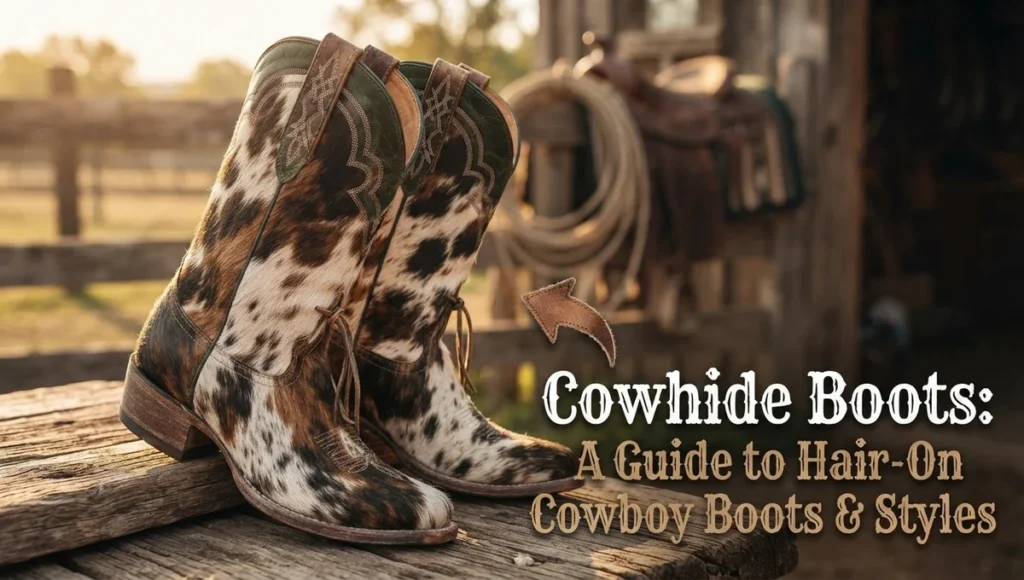
With genuine hair-on hide, the natural hair remains visible on the surface. The hide itself can contain different markings, colors, hair directions, and patterns. As a result, two pairs made from natural cowhide may not look identical. Current boot-care guidance specifically notes that these variations are normal characteristics of genuine cowhide rather than automatically being defects.
I think this is the first thing a buyer should understand before shopping online. A product photo can show you the general style, but it may not show the exact pattern you receive.
That makes cowhide boots interesting—but it also creates a few buying decisions that are easy to overlook.
What Are Hair-On Cowhide Boots?
Hair-on cowhide boots are made from cowhide that has been processed into leather while retaining the natural hair on the outer surface.
The result is a boot with a noticeably different appearance from conventional smooth leather. Depending on the hide, you may see black-and-white patches, brown-and-white markings, brindle patterns, speckling, or relatively subtle natural variations.
Myra USA describes hair-on hide as authentic leather with the natural hair preserved, while noting that the individual markings of hides create a distinctive appearance.
The important point is that cowhide describes the material, while cowboy describes the boot style.
You can therefore find cowhide used on different silhouettes, including:
- Traditional Western cowboy boots
- Cowgirl boots
- Ankle boots
- Mid-calf boots
- Tall Western boots
- Fashion-focused statement boots
- Boots with different toe shapes and heel profiles
So when shopping, I would avoid searching only by material. Think about the material + boot shape + intended use.
Hair-On Cowhide vs Cowhide-Print Boots
This is one of the most useful distinctions to make before buying.
A genuine hair-on boot has actual natural hair remaining on the hide. A cowhide-print boot may use smooth leather or another material with a pattern applied to its surface.
Visually, they can sometimes look similar in a product photograph.
The physical surface is different.
| Feature | Genuine Hair-On Cowhide | Cowhide Print |
|---|---|---|
| Surface | Natural hair remains visible | Usually smooth |
| Pattern | Natural hide markings | Printed or embossed |
| Pair-to-pair variation | Expected | Usually more uniform |
| Texture | Hair and natural hide texture | Smooth or manufactured texture |
| Buying consideration | Pattern can differ from photo | More predictable appearance |
| Care | Requires hair-on-specific attention | Depends on underlying material |
If a product description only says “cowhide style” or “cow print,” I would not automatically assume it is genuine hair-on cowhide.
Look for wording such as hair-on hide, hair-on cowhide, or another clear material description.
And if the seller does not explain the material, ask before purchasing.
Why No Two Cowhide Boots Look Exactly the Same
This is not just a marketing detail.
Natural cowhide has its own pattern and color distribution. One boot may contain a larger dark patch while the other has more light-colored surface. Hair direction and density can also vary.
A current Western boot guide explains that natural cowhide does not behave like printed fabric, meaning the finished pair can differ from the photograph used in an online listing.
That gives buyers two choices.
If you want a perfectly predictable appearance, a printed or uniform leather design may be easier.
If you want something that feels more individual, natural cowhide has an advantage.
Before ordering online, I would specifically check whether the seller is showing:
- The exact pair you will receive, or
- A representative example of the pattern.
That small detail can completely change the buying experience.
Popular Cowhide Boot Styles
The material is only one part of the decision. The boot’s shape determines how dramatic, traditional, or versatile it looks.
Classic Western Cowhide Boots
Traditional Western boots usually have a taller shaft, elevated heel, and pull-on construction.
This is the style I would consider if your goal is to keep the Western character obvious rather than turning cowhide into a subtle fashion detail.
Classic cowboy boots have historically been associated with riding and Western wear, and conventional versions commonly use cowhide leather.
Cowhide Ankle Boots
Ankle boots are easier to introduce into an everyday wardrobe.
They can work with jeans, trousers, casual dresses, and other clothing without creating as strong a Western silhouette as a tall cowboy boot.
If you like the cowhide pattern but are not sure about committing to a full Western look, ankle boots are worth considering.
Mid-Calf Cowhide Boots
Mid-calf boots sit between casual ankle boots and taller Western silhouettes.
They can provide more visual impact while remaining relatively flexible for styling.
Tall Hair-On Cowboy Boots
Tall boots make the cowhide pattern much more noticeable.
For that reason, I would usually treat them as a statement piece. You do not necessarily need a complicated outfit when the boots already provide texture and contrast.
Choosing the Right Toe Shape
Cowhide gets most of the attention, but toe shape can completely change the appearance of the finished boot.
Common cowboy boot toe shapes include:
- Round toe
- Square toe
- Pointed toe
- Snip toe
The traditional Western silhouette can range from rounded to pointed, while square-toe designs have become common in contemporary Western footwear.
I would make this decision based on both fit and style.
A pointed or snip toe can create a sharper appearance, but it should not force your toes into an uncomfortable position.
A square toe can create a broader, more contemporary look.
A round toe generally provides a more traditional visual impression.
There is no single toe shape that makes every pair of cowhide boots better.
Are Cowhide Boots Good for Everyday Wear?
They can be, but hair-on cowhide deserves a little more consideration than smooth leather.
Current care guidance recommends gentle brushing, avoiding excessive moisture, and allowing wet boots to dry naturally rather than exposing them to direct heat.
That makes intended use important.
| Intended Use | Cowhide Style to Consider | Main Thing to Check |
|---|---|---|
| Casual everyday wear | Ankle or simple Western | Comfort and easy maintenance |
| Western events | Classic tall boot | Shaft, heel, and toe shape |
| Fashion statement | Bold hair-on hide | Pattern and finish |
| Dry-weather outings | Hair-on cowhide | Surface condition |
| Frequent wet conditions | Consider alternatives | Moisture resistance and care |
| Long-term wardrobe piece | Quality construction | Sole and repairability |
I would be particularly careful about buying hair-on boots for an environment where they will regularly encounter rain, mud, or standing water.
The material can be beautiful without being the most convenient choice for every environment.
Do Hair-On Cowhide Boots Shed?
A small amount of shedding can happen with genuine hair-on cowhide.
A recent cowhide-specific care guide explains that friction around areas such as the ankle and toe can loosen some hairs, particularly during early wear.
That does not automatically mean the boots are defective.
The more important question is how much shedding is occurring and where.
Light loss around high-friction areas is different from rapidly developing bald patches.
This is another reason I would not judge a pair only from its first photograph. Natural hair-on footwear is a material that changes with use.
If keeping the original hair appearance is your highest priority, you should understand that wear and friction can gradually affect the surface.
How to Care for Cowhide Boots
Hair-on cowhide should not simply be treated like ordinary smooth leather.
Stiefeld’s current care guide recommends using a soft-bristle brush to remove dust and gently dabbing stains with a slightly damp cloth while avoiding soaking the hide.
A practical routine looks like this:
1. Brush Gently
Use a soft brush and follow the natural direction of the hair.
2. Spot Clean
For a small mark, use a slightly damp cloth and dab rather than aggressively scrubbing.
3. Avoid Soaking
Do not treat the boots as washable footwear. Excessive moisture can create problems for the hide and hair.
4. Dry Naturally
If the boots get wet, allow them to dry at room temperature.
Direct heat from heaters or hair dryers can damage leather by drying it too quickly. Boot Barn also recommends natural air-drying rather than direct heat for cowboy boots.
5. Store Them Correctly
Keep the boots in a dry, ventilated place.
Boot trees or boot shapers can help preserve their shape, particularly when the boots are stored for longer periods.
What About Rain and Water?
This is one area where I would avoid making an overly broad claim such as “cowhide boots are waterproof.”
They are not all built or finished the same way.
For hair-on hide, excessive moisture is particularly worth avoiding. Current care guidance recommends keeping the material from becoming saturated and allowing wet footwear to dry naturally.
So if you live somewhere with frequent rain, ask the seller about the specific boot rather than assuming that the word “cowhide” tells you everything about weather resistance.
For occasional light exposure, proper care may be sufficient.
For regular wet-weather use, I would look for footwear specifically designed around those conditions.
How to Style Cowhide Boots Without Looking Overdressed
The easiest mistake with statement boots is trying to make every other part of the outfit equally dramatic.
I would usually do the opposite.
Let the boots provide the pattern.
With Jeans
Dark denim and cowhide boots create an easy Western-inspired combination.
Bootcut or straight-leg jeans can work particularly naturally with taller Western boots.
With Simple Dresses
A simple dress can balance a visually strong cowhide pattern.
This approach works especially well when the boots are the main statement.
With Neutral Clothing
Black, white, beige, brown, denim, and other relatively simple colors can let natural cowhide patterns stand out without making the outfit feel chaotic.
With Western Clothing
If you want a full Western look, cowhide boots can be combined with other Western pieces.
But I would still think about balance. Boots, belt, hat, shirt, and jacket do not all need to compete for attention.
You should also know about Used car dealer
What Should You Check Before Buying Cowhide Boots Online?
This is where I think buyers can avoid the most unnecessary mistakes.
Before clicking “buy,” I would check:
Material: Does the listing clearly say genuine hair-on cowhide?
Exact pattern: Is the pictured pair the exact pair being shipped?
Sizing: Is there a proper size chart?
Toe shape: Does the design give your foot enough room?
Shaft measurements: Especially important for tall boots.
Sole: Check whether the sole is intended for casual, fashion, riding, or heavier use.
Return policy: Natural pattern variation is one thing; an uncomfortable fit is another.
Care instructions: Know how the manufacturer expects the material to be maintained.
Photos: Look for close-ups showing the actual hair texture rather than only distant lifestyle images.
These details are more useful than simply looking for the most attractive product photograph.
Cowhide Boots vs Smooth Leather Cowboy Boots
If you are deciding between hair-on cowhide and smooth leather, think about your priorities.
| Priority | Hair-On Cowhide | Smooth Leather |
|---|---|---|
| Natural visual variation | Excellent | Lower |
| Statement appearance | Strong | Depends on design |
| Uniform appearance | Lower | Higher |
| Traditional leather look | Moderate | Strong |
| Surface maintenance | More specialized | More familiar |
| Pattern individuality | Very high | Usually lower |
| Easy styling | Depends on pattern | Generally versatile |
I would choose hair-on cowhide when individuality is a major part of what you want.
I would lean toward smooth leather when predictable appearance and conventional leather maintenance are more important.
Neither choice needs to be treated as universally superior.
A Simple Cowhide Boots Buying Checklist
If I were narrowing down several pairs, I would use this checklist:
1. Identify the material.
Make sure you know whether it is genuine hair-on hide or a printed pattern.
2. Decide the purpose.
Everyday wear, Western events, fashion, riding, or occasional use can lead to different choices.
3. Choose the silhouette.
Ankle, mid-calf, or tall.
4. Choose the toe.
Round, square, pointed, or snip.
5. Check the pattern.
Remember that genuine hide can vary.
6. Check the fit.
Do not sacrifice comfort for appearance.
7. Read care instructions.
Hair-on hide needs different attention from many smooth leather boots.
8. Review returns.
Especially important when purchasing online.
That process takes a few extra minutes, but it can prevent a much more expensive mistake.
The Biggest Mistake to Avoid With Cowhide Boots
The biggest mistake is buying them only because the photograph looks unique.
Natural cowhide is visually impressive, but the pattern is only one part of the product.
A good buying decision also considers:
- Construction
- Fit
- Intended use
- Weather exposure
- Maintenance
- Return policy
- Material authenticity
A beautiful pair that spends most of its life in a closet because it is uncomfortable or difficult to maintain is not necessarily a good purchase.
For me, the value of cowhide boots comes from finding the point where appearance and practicality meet.
Frequently Asked Questions
What are cowhide boots?
Cowhide boots are footwear made using cowhide leather, while hair-on cowhide boots retain the natural hair on the hide’s surface. This creates the distinctive patterns and texture associated with many Western designs. Cowhide can be used on different boot shapes, so the term does not describe one particular silhouette. When shopping, I would check whether the listing means genuine hair-on hide or simply a cowhide-inspired print.
Are hair-on cowhide boots real leather?
Yes, genuine hair-on cowhide is real animal hide that has been processed into leather while retaining the natural hair on the surface. The key is to distinguish genuine hair-on hide from smooth leather or another material printed with a cowhide pattern. If the product description is vague, check the material specifications before purchasing.
Do cowhide boots shed hair?
Some light shedding can occur with genuine hair-on cowhide, especially around areas exposed to repeated friction. A recent cowhide care guide notes that light shedding around contact points can be normal. However, heavy ongoing hair loss or rapidly developing bald patches is a different situation and may justify contacting the seller or a leather specialist.
How do you clean hair-on cowhide boots?
Start with a soft-bristle brush to remove dust. For small stains, use a slightly damp cloth and gently dab the affected area. Avoid soaking the boots and avoid harsh cleaning methods. Current cowhide care guidance recommends brushing in the direction of the hair and allowing the boots to dry naturally if they become wet.
Can you wear cowhide boots in the rain?
You should be cautious with rain, particularly with hair-on cowhide. Excessive moisture can affect the hide and its appearance, so I would not choose hair-on boots specifically for consistently wet conditions unless the manufacturer provides appropriate weather guidance. If they become wet, allow them to dry naturally and keep them away from direct heat.
Why do cowhide boots look different from the product photo?
Genuine cowhide has natural variations in color, pattern, hair direction, and markings. Therefore, the exact pair may differ from a representative photograph. This is especially important when buying online. Before ordering, check whether the seller states that each pair is unique or whether the pictured pair is the exact pair you will receive.
Are cowhide boots good for everyday wear?
They can be, especially when the boot construction, fit, and environment match your needs. Hair-on cowhide is visually distinctive but requires more careful attention to moisture, friction, and cleaning than a buyer might expect from ordinary footwear. For dry, casual use, it can be a practical choice. For frequent wet or rough conditions, I would compare the specific boot’s construction and care requirements first.
What style of cowhide boots is easiest to wear?
An ankle or relatively simple Western silhouette is often easier to incorporate into everyday outfits because it creates less visual impact than a tall, heavily patterned boot. If you want the boots to become the main feature of an outfit, a tall hair-on cowhide style can make more sense. The right choice depends on how prominently you want the Western aesthetic to appear.
Are cowhide boots the same as cowboy boots?
Not exactly. Cowhide describes the material, while cowboy or Western describes the boot style. A cowboy boot can be made from cowhide, but cowhide can also appear on ankle boots, fashion boots, and other footwear designs. That distinction is useful when searching because “cowhide boots” and “cowboy boots” can represent overlapping but different product categories.
What should I check before buying cowhide boots online?
Check the exact material, whether the pattern may vary, sizing information, toe shape, shaft measurements, construction, sole, care instructions, and return policy. I would pay particular attention to whether the listing shows the exact pair or a representative photograph. With natural hair-on hide, the difference between those two descriptions can matter considerably.
Conclusion
I think the appeal of cowhide boots is their ability to make a traditional Western shape feel personal. Hair-on hide brings natural patterns and texture that can turn an ordinary-looking boot into a statement piece, but that individuality also comes with responsibilities for the buyer.
Before purchasing, I would look beyond the photograph. Confirm the material, understand whether the pattern can vary, check the fit, choose a toe and shaft that suit your use, and learn how the manufacturer recommends caring for the hide.
For everyday styling, a simpler silhouette can be easier to wear. For a stronger fashion statement, bold hair-on patterns can do much more of the visual work themselves.
The practical lesson is simple: do not buy cowhide boots only because they look unique. Buy them because the material, construction, fit, care requirements, and intended use all make sense for you.
Sources and References
- Stiefeld Boots Canada, Boot Care Guide: Hair-On Hide and Leather Boots.
- Stiefeld Boots, Care Guide: How to Maintain Your Stiefeld Boots.
- La Herradura Western Wear, Do Pelo de Vaca Boots Shed? Cowhide Boot Care Guide.
- La Herradura Western Wear, Why Does Every Pair of Cowhide Cowboy Boots Look Different?
- Myra USA, Cowboy Boot Leather Types: Materials, Durability, and Style.
- Boot Barn, Cowboy Boot Care Guide.
Disclaimer: This article is for general informational purposes only. Material composition, sizing, construction, care instructions, weather resistance, and return policies vary by manufacturer and product. Always check the seller’s current specifications and care guidance before purchasing.

Tech & Entertainment journalist covering automotive launches, trending media, and digital culture at Wordplay2018