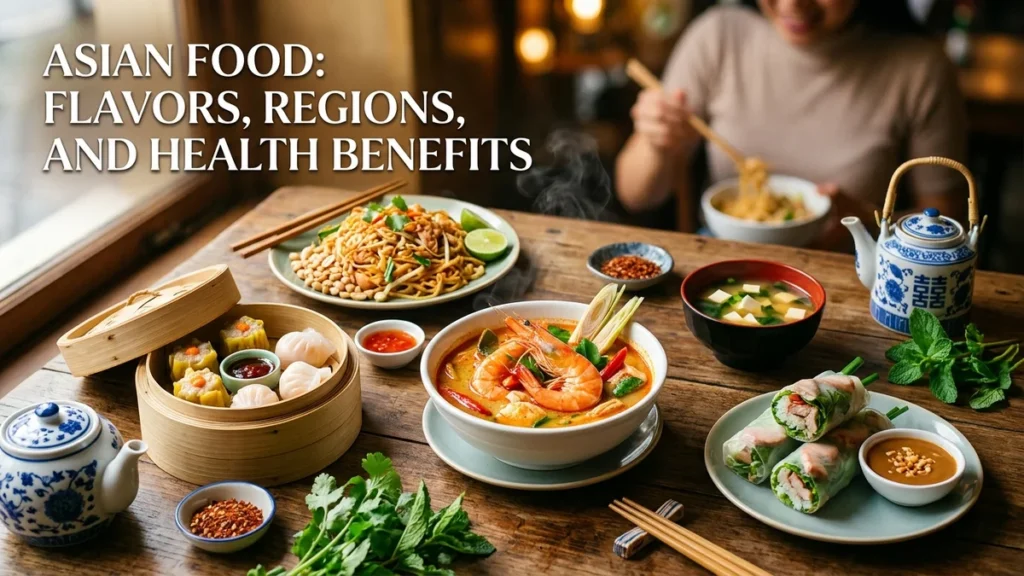
I believe that Asian food is one of the most misunderstood and simultaneously most beloved culinary categories in the world. From the sizzling woks of Bangkok’s street markets to the delicate sushi counters of Tokyo, from the fragrant biryanis of Hyderabad to the steaming dumpling baskets of Shanghai, Asian food encompasses an astonishing diversity that defies any single label. In my analysis, the term “Asian food” is less a description of a unified cuisine and more an umbrella that shelters dozens of distinct culinary traditions, each shaped by geography, climate, religion, trade, and centuries of cultural exchange. We can see this diversity reflected in everything from the staples used to the cooking methods employed and the flavor profiles prioritized.
From my perspective, understanding Asian food requires us to abandon the temptation to treat it as a monolith. The continent stretches from Turkey in the west to Japan in the east, and from the Arctic Circle to the tropical islands of Indonesia. This vast expanse contains everything from Lebanese mezze to Japanese sashimi, and the cooking traditions within it have developed in wildly different directions. In this guide, we will explore the major culinary regions of Asia, examine the ingredients and techniques that define them, and consider how Asian food has become a global phenomenon. Whether you are a curious home cook or simply someone who enjoys exploring new flavors, I believe this article will give you a deeper appreciation for the richness of Asian cuisine. For more engaging content on food, games, and culture, you can also visit Wordplay 2018.
Key Takeaways: What You Need to Know About Asian Food
Before we dive into the details, I want to summarize the most important points that will guide our exploration. First, Asian food is not a single cuisine but a collection of distinct regional traditions. Second, the five major culinary regions of Asia are East, Southeast, South, Central, and West Asia. Third, each region has its own characteristic ingredients, cooking methods, and flavor profiles. Fourth, Asian food offers significant health benefits, particularly when traditional cooking methods are preserved. Fifth, the global market for Asian food is growing rapidly, driven by tourism, migration, and digital media. Finally, understanding the cultural significance of Asian food helps us appreciate it beyond mere sustenance.
What Is Asian Food? Defining a Culinary Giant
Asian food is an umbrella term for the many food traditions that developed across the Asian continent. It cannot be reduced to one set of ingredients or techniques, because the cuisines across the continent have been shaped by local agriculture and waterways, trade routes, migration, climate, religious practices, and cultural exchange. To make this enormous subject easier to navigate, food scholars and writers typically divide Asia into five broad culinary regions: East, Southeast, South, Central, and West Asia. These groupings are useful rather than absolute, and individual countries often contain several distinct regional cuisines.
Let us consider why this distinction matters. When someone says “I love Asian food,” they might be referring to the spicy curries of Thailand, the delicate flavors of Japanese kaiseki, the robust street food of Korea, or the aromatic biryanis of India. Each of these traditions has its own history, its own pantry, and its own philosophy of cooking. In my view, the practical lesson is that appreciating Asian food requires curiosity and a willingness to explore beyond the familiar. The more we learn about the specific regions, the more we can enjoy the incredible variety that Asian food offers.
The Five Major Culinary Regions of Asia
I have found that breaking Asian food into five major regions provides a practical framework for understanding the continent’s culinary diversity. Each region has developed its own distinctive character, shaped by the ingredients available, the climate, and the cultural influences that have passed through over centuries.
East Asian Cuisine: Rice, Soy, and Fermentation
East Asian cuisine encompasses Chinese, Japanese, Korean, Mongolian, and Taiwanese food traditions, among others. Familiar examples include dim sum, bubble tea, ramen, and bibimbap. Across the region, ingredients such as rice, wheat noodles, soy products, vegetables, seafood, and meat recur, while steaming, stir-frying, braising, grilling, and fermentation appear in different forms. The importance and preparation of these elements vary considerably from one cuisine to another.
Chinese cuisine makes the limits of broad regional labels especially clear. Cantonese, Sichuan, Hunan, and northern Chinese traditions differ in their staple ingredients, seasonings, and cooking methods, and each contains further local variations. Japanese cuisine emphasizes seasonality and presentation, with sushi, sashimi, and tempura representing only a fraction of its depth. Korean cuisine is known for its fermentation traditions, including kimchi and the jang sauces that were added to UNESCO’s intangible cultural heritage list in 2024.
Southeast Asian Cuisine: Balance and Aromatics
Southeast Asian cuisine includes the food traditions of Thailand, Vietnam, Malaysia, Singapore, Indonesia, the Philippines, Myanmar, Cambodia, and Laos. This region is characterized by a balance of sweet, sour, salty, spicy, and bitter flavors, often achieved through the use of fresh herbs, citrus juices, fish sauce, and chili. Common ingredients include lemongrass, galangal, tamarind, coconut milk, and rice.
The region’s cooking methods emphasize grilling, stir-frying, and braising, with lean proteins like poultry and fish featuring prominently. Thai cuisine, for example, is celebrated for its complex interplay of flavors, while Vietnamese cuisine is known for its fresh herbs and light broths. In my analysis, Southeast Asian food offers some of the most accessible entry points for newcomers to Asian cuisine because its flavors are bold yet balanced.
South Asian Cuisine: Spices and Vegetarian Traditions
South Asian cuisine encompasses the food traditions of India, Pakistan, Bangladesh, Sri Lanka, Nepal, and Bhutan. This region is known for its extensive use of spices, including cumin, coriander, turmeric, cardamom, and cloves. Vegetarian dishes are common, particularly in India, where lentils, peas, and beans provide high dietary fiber. Whole wheat roti and rice are staple carbohydrates.
Curry is a common dish across South Asia, with origins in the Indian subcontinent. Countries in East Asia typically use a coconut milk base in their curries, whilst countries in South West Asia typically use a yoghurt base. This regional variation illustrates how a single dish category can take radically different forms depending on local ingredients and preferences. From my perspective, South Asian cuisine is one of the most complex and rewarding culinary traditions in the world, offering layers of flavor that reward patient exploration.
Central Asian Cuisine: Nomadic Influences and Hearty Dishes
Central Asian cuisine includes the food traditions of Kazakhstan, Uzbekistan, Kyrgyzstan, Tajikistan, and Turkmenistan. This region has been influenced by its nomadic history, with a focus on meat, dairy, and hearty grains. A dish known as plov, or pilaf, is a staple across the region, typically made with rice, meat, carrots, and onions. Bread is also central to Central Asian food culture, with various types of flatbread serving as both sustenance and a symbol of hospitality.
Central Asian cuisines tend to be less familiar to Western audiences, partly because the region has not experienced the same level of culinary globalization as East or Southeast Asia. However, the hearty, flavorful dishes of Central Asia offer a fascinating glimpse into the culinary traditions of the Silk Road, where ingredients and techniques from East and West converged.
West Asian Cuisine: Mezze, Grilling, and Ancient Traditions
West Asian cuisine encompasses the food traditions of Turkey, Iran, Iraq, Syria, Lebanon, Israel, Jordan, and the Arabian Peninsula. This region is often marketed as Middle Eastern cuisine in Western countries, though the term “Mediterranean” also overlaps with parts of West Asia. Common elements include mezze spreads, grilled meats, flatbreads, olive oil, and an abundance of fresh herbs and vegetables.
West Asian cuisine has ancient roots, with some dishes tracing back thousands of years. The use of yoghurt as a base for curries and sauces distinguishes it from East Asian traditions, which more commonly use coconut milk. In my view, West Asian food is one of the most underappreciated aspects of Asian cuisine in global discourse, despite its profound influence on Mediterranean and European cooking.
Table 1: Comparing the Five Major Asian Culinary Regions
The following table provides a side-by-side comparison of the five major Asian culinary regions. I have designed this table to help you quickly understand the defining characteristics of each region, including its staple ingredients, signature cooking methods, and representative dishes.
| Region | Staple Ingredients | Signature Cooking Methods | Representative Dishes |
|---|---|---|---|
| East Asia | Rice, wheat noodles, soy products, seafood | Steaming, stir-frying, braising, fermentation | Ramen, bibimbap, dim sum, sushi |
| Southeast Asia | Rice, coconut milk, lemongrass, fish sauce | Grilling, stir-frying, braising | Pad Thai, pho, laksa, nasi goreng |
| South Asia | Lentils, rice, wheat, spices | Stewing, frying, tandoor cooking | Biryani, dal, curry, dosa |
| Central Asia | Meat, dairy, rice, flatbread | Roasting, boiling, steaming | Plov, mantu, shurpa, samsa |
| West Asia | Olive oil, flatbread, yoghurt, herbs | Grilling, mezze preparation, stewing | Hummus, kebab, tagine, falafel |
The most important takeaway from this table is that Asian food is defined by its regional diversity, not by a single unifying characteristic. Each region has developed its own culinary identity based on the ingredients available, the climate, and the cultural influences that have shaped it over centuries. When we recognize this diversity, we can approach Asian food with greater appreciation and curiosity.
The Essential Ingredients of Asian Cooking
I believe that one of the most rewarding aspects of exploring Asian food is discovering the ingredients that give each cuisine its distinctive character. While the specific ingredients vary by region, several staples appear across multiple Asian culinary traditions, often in different forms.
Soy sauce is perhaps the most widely used condiment in Asian cooking. It appears in Chinese, Japanese, Korean, and Southeast Asian cuisines, though each tradition has its own varieties and preferences. Rice vinegar, sesame oil, and fish sauce are also common across the continent. Coconut milk serves as a base for curries in Southeast Asia, while yoghurt performs a similar function in West Asia.
Fresh aromatics are another defining feature of Asian food. Garlic, ginger, and chilies form the foundation of many dishes, particularly in South and Southeast Asian cooking. Lemongrass, galangal, and kaffir lime leaves add distinctive citrusy notes to Thai and Vietnamese dishes. In East Asian cooking, scallions, ginger, garlic, and rice wine are essential for building flavor.
The sheer variety of ingredients used across Asian cuisines reflects the continent’s extraordinary biodiversity and the centuries of trade and cultural exchange that have shaped its food traditions. From the soybeans of East Asia to the spices of South Asia, from the coconut palms of Southeast Asia to the olive groves of West Asia, each ingredient tells a story of place, history, and human ingenuity.
Practical Applications: How to Explore Asian Food at Home
Let us consider how you can begin exploring Asian food in your own kitchen. The key is to start with a well-stocked pantry and a willingness to experiment. I recommend beginning with a few foundational ingredients: good-quality soy sauce, rice vinegar, sesame oil, garlic, ginger, and a neutral cooking oil. These ingredients will allow you to prepare a wide range of dishes from different Asian traditions.
Once you have your pantry established, choose a region to explore. If you are drawn to the bold flavors of Southeast Asia, start with a simple Thai curry or Vietnamese pho. If you prefer the umami-rich dishes of East Asia, try a Japanese donburi or a Chinese stir-fry. The important thing is to cook with intention and to pay attention to the balance of flavors.
In my analysis, the most common mistake home cooks make when preparing Asian food is treating the cuisine as a monolith. A dish from Sichuan province should not be prepared with the same techniques or ingredients as a dish from Tokyo or Bangkok. Each tradition has its own logic, and respecting that logic is the first step toward cooking authentic and delicious Asian food.
How Asian Food Promotes Health and Well-Being
From what the research shows, traditional Asian diets offer significant health benefits when compared to typical Western dietary patterns. Many Asian cuisines include healthy soybeans and other plant-based protein sources, unsweetened tea, and abundant fruits and vegetables. Diets featuring traditional Asian foods, especially those higher in fiber, show promise for preventing chronic disease.
Fermented foods, which are central to many Asian cuisines, have been linked to improved gut health, immune regulation, and anti-inflammatory effects. Korea’s kimchi, rich in probiotics, supports gut health and immunity, while India’s turmeric contains curcumin, a compound with anti-inflammatory and antioxidant properties.
However, I must note that not all aspects of Asian food are equally healthful. Southeast Asian cuisine often incorporates a high amount of saturated fat and sodium from cooking oils like coconut and palm oil and ingredients like soy sauce and fish sauce. South Asian cuisine can include heavy use of refined grains and saturated fat. The key, as with any cuisine, is balance and moderation. By emphasizing whole grains, lean proteins, and fresh vegetables, you can enjoy the flavors of Asian food while supporting your health.
Table 2: Health Benefits and Considerations of Asian Food by Region
The following table summarizes the health benefits and potential concerns associated with each major Asian culinary region. I have included this table to help readers make informed choices about incorporating Asian food into their diets.
| Region | Key Health Benefits | Potential Concerns |
|---|---|---|
| East Asia | Soy-based protein, fresh ingredients, variety of cooking methods | High sodium from preserved meats and condiments |
| Southeast Asia | Lean proteins, vegetables, citrus juices, grilling and stir-frying | High saturated fat from coconut and palm oil, high sodium |
| South Asia | High fiber from lentils and beans, anti-inflammatory spices | Refined grains, saturated fat from meat and coconut oil |
| Central Asia | Hearty grains, lean meats, dairy | Limited fresh vegetables, high fat content in some dishes |
| West Asia | Olive oil, fresh herbs, vegetables, legumes | High sodium in some preserved foods, variable fat content |
The most important takeaway from this table is that Asian food offers a wide range of health benefits, but not every dish or preparation method is equally healthful. By understanding the nutritional profile of each region, you can make choices that align with your dietary goals while still enjoying the flavors and traditions of Asian cuisine.
The Global Rise of Asian Food: Market Trends and Cultural Impact
I have found that Asian food has experienced a remarkable surge in global popularity over the past decade. The global Asian food market was valued at USD 35.93 billion in 2025 and is projected to grow to USD 38.55 billion in 2026, reaching USD 71.65 billion by 2034, exhibiting a CAGR of 8.05% during that period. The Asia Pacific region dominates the global market with a 60.04% share, supported by strong regional consumption of packaged and convenient Asian foods.
This growth is driven by several factors. Rising global exposure to Asian cuisine through tourism, migration, and digital media continues to fuel international demand. In 2024, the Asia Pacific region welcomed 316 million visitors, a 33% increase from 2023, and increased tourist exposure to authentic cuisines in countries like Japan, Thailand, Singapore, and India is expected to accelerate global demand for packaged Asian food.
In my view, this market growth reflects something deeper than mere consumer trends. It reflects a genuine appreciation for the flavors, techniques, and cultural traditions that Asian food represents. When people seek out Asian food, they are not just looking for a meal. They are seeking connection, discovery, and the pleasure of experiencing something new and delicious.
How to Read a Menu and Order at an Asian Restaurant
Let us consider a practical scenario that many readers will encounter: dining at an Asian restaurant and feeling unsure about what to order. In my analysis, the key is to approach the menu with curiosity and to ask questions. Most restaurants are happy to explain their dishes, and the staff can often recommend signature items or help you navigate unfamiliar ingredients.
If you are new to a particular cuisine, start with familiar dishes and gradually expand your horizons. At a Thai restaurant, for example, you might begin with pad Thai and then try a curry or a som tam salad. At a Chinese restaurant, you could start with dumplings or a stir-fry and then explore regional specialties like Sichuan mapo tofu or Cantonese dim sum.
From my perspective, the most rewarding approach is to order family-style, sharing multiple dishes with your dining companions. This allows everyone to sample a variety of flavors and to discover new favorites. Asian food, in many cultures, is designed to be shared, and this communal aspect is part of what makes it so enjoyable.
Common Mistakes People Make When Exploring Asian Food
I believe that even enthusiastic fans of Asian food sometimes fall into common traps that limit their enjoyment. One mistake is to assume that all Asian food is spicy. While chili peppers feature prominently in some cuisines, such as Thai, Sichuan, and Korean, others, like Japanese and Cantonese, emphasize subtle flavors and delicate textures.
Another mistake is to treat Asian food as a single category rather than a collection of distinct traditions. Asking for “Asian food” is like asking for “European food.” It tells you almost nothing about what you will actually eat. The more specific you can be about the cuisine you are interested in, the more rewarding your experience will be.
A third mistake is to overlook the cultural significance of the food. In many Asian cultures, food is not just sustenance but a central part of social life, religious practice, and family tradition. Understanding this context enriches the experience of eating Asian food and helps us appreciate the care and intention that goes into its preparation.
Expert Recommendations for Enjoying Asian Food
I recommend that anyone interested in Asian food approach it with an open mind and a spirit of exploration. Start with a region that appeals to you and learn about its signature dishes, ingredients, and cooking techniques. Visit Asian grocery stores and explore the aisles, looking for ingredients you have not tried before. Cook at home when possible, and do not be afraid to make mistakes. Every dish you prepare teaches you something new.
From what the research shows, the most successful approach to exploring Asian food is to focus on one cuisine at a time. Rather than trying to master all of Asian cooking at once, choose a tradition that interests you and dive deep into it. Learn its techniques, its flavor profiles, and its cultural context. This approach will give you a deeper understanding and a more authentic experience than skimming the surface of multiple cuisines.
“Asian food is very easy to like because it hits your mouth very differently than European food does. In European food, there may be two things to hit – maybe sweet and salty, maybe salty-savory, but Asian kind of works around, plus you have that distinct flavor that’s usually working in Asian food.”
— Tom Colicchio, American chef, BrainyQuote
This quotation from Tom Colicchio captures something essential about the appeal of Asian food. The multi-dimensional flavor profiles that define so many Asian dishes are what make them so satisfying and memorable. Colicchio’s observation reminds us that Asian food engages the palate in ways that are distinct from European culinary traditions, and that this difference is a source of its enduring appeal.
“As long as the food is well prepared and not overdone, I think it tastes good. It doesn’t matter if it’s Chinese, Japanese, anything.”
— Martin Yan, Chinese American chef and food writer, FixQuotes
Martin Yan’s perspective offers a valuable lesson about the universality of good cooking. Regardless of the cuisine or tradition, careful preparation and respect for ingredients are what ultimately matter. In my view, this quotation is particularly relevant for anyone who feels intimidated by the diversity of Asian food. The principles of good cooking apply across all traditions, and the best way to learn is simply to start cooking.
Step-by-Step: Building Your Asian Pantry from Scratch
I have found that the best way to begin cooking Asian food at home is to build your pantry gradually, adding ingredients as you explore different recipes. Here is a step-by-step approach that I recommend for beginners.
First, start with the essentials: soy sauce, rice vinegar, toasted sesame oil, garlic, ginger, and a neutral cooking oil. These ingredients will allow you to prepare a wide range of dishes from East and Southeast Asia.
Second, add regional specialties as you explore. If you are cooking Thai food, purchase fish sauce, coconut milk, and curry paste. If you are cooking Japanese food, add mirin, sake, and miso paste. And If you are cooking Indian food, stock up on cumin, coriander, turmeric, and garam masala.
Third, invest in a few key tools. A wok or a large skillet is essential for stir-frying. A rice cooker makes preparing rice effortless. A sharp knife and a cutting board are fundamental for preparing ingredients.
Fourth, practice the techniques that define Asian cooking. Stir-frying, steaming, braising, and fermenting are the building blocks of many Asian dishes. Each technique requires practice, but the rewards are well worth the effort.
Conclusion
Asian food is a vast and rewarding subject that rewards curiosity, patience, and a willingness to explore. I believe that by understanding the major culinary regions of the continent, learning about their essential ingredients, and appreciating their cultural significance, we can enjoy Asian food on a much deeper level. The most useful finding from this analysis is that diversity is the defining characteristic of Asian food. There is no single Asian cuisine, but rather a collection of traditions, each with its own history, techniques, and flavors.
In my view, the practical lesson for anyone interested in Asian food is to start somewhere and keep exploring. Choose a region that appeals to you, learn about its signature dishes, and try cooking them at home. Visit restaurants that specialize in cuisines you have not tried before. Ask questions, read widely, and stay curious. My advice is to begin with one cuisine and let your exploration grow naturally from there. Asian food will reward your attention with flavors and experiences that are endlessly satisfying and deeply meaningful.
Frequently Asked Questions
What Are the Main Types of Asian Food?
The main types of Asian food correspond to the continent’s five major culinary regions: East Asian, Southeast Asian, South Asian, Central Asian, and West Asian. Each region has its own characteristic ingredients, cooking methods, and flavor profiles. East Asian cuisine includes Chinese, Japanese, and Korean traditions. Southeast Asian cuisine includes Thai, Vietnamese, and Malaysian food. South Asian cuisine includes Indian, Pakistani, and Sri Lankan dishes. Central Asian cuisine features the food of Kazakhstan and Uzbekistan, while West Asian cuisine encompasses Turkish, Iranian, and Lebanese traditions.
Is Asian Food Healthy?
Many traditional Asian diets offer significant health benefits, including plant-based proteins, abundant vegetables, and fermented foods that support gut health. Diets featuring traditional Asian foods, especially those higher in fiber, show promise for preventing chronic disease. However, some Asian dishes can be high in sodium or saturated fat, so moderation and balance are important. The healthiest approach is to emphasize whole grains, lean proteins, and fresh vegetables while limiting fried foods and high-sodium condiments.
What Ingredients Do I Need for Asian Cooking?
The essential ingredients for Asian cooking vary by region, but a good starting pantry includes soy sauce, rice vinegar, sesame oil, garlic, ginger, and a neutral cooking oil. As you explore different cuisines, you can add regional specialties such as fish sauce, coconut milk, curry paste, mirin, miso paste, and spices like cumin, coriander, and turmeric. Building your pantry gradually allows you to learn about each ingredient and how it contributes to the flavor of Asian food.
How Has Asian Food Influenced Global Cuisine?
Asian food has had a profound influence on global cuisine, introducing techniques like stir-frying and ingredients like soy sauce and ginger to kitchens around the world. The global Asian food market was valued at USD 35.93 billion in 2025 and continues to grow. Asian-inspired dishes and flavors have become mainstream in many Western countries, and the popularity of Asian food shows no signs of slowing down.
What Is the Difference Between Pan-Asian and Asian Fusion?
Pan-Asian cuisine refers to dishes that draw from multiple Asian culinary traditions, often combining ingredients and techniques from different regions. Asian fusion, by contrast, typically blends Asian flavors with Western cooking methods or ingredients. Both approaches can produce delicious results, but they are distinct from traditional regional cuisines. In my view, exploring traditional Asian food first provides a foundation that makes pan-Asian and fusion cooking more meaningful.
Sources and References
- Cozymeal. “Asian Cuisine: A Guide to Asia’s Regional Foods and Flavors.” Cozymeal, 2026.
- Wikipedia. “Asian cuisine.” Wikipedia, 2026.
- American Heart Association. “Asian Cuisine with Heart.” Heart.org, 2024.
- Fortune Business Insights. “Asian Food Market Size, Share, Growth and Global Industry Analysis.” GII Research, 2026.
- Nation Thailand. “Asia’s Food Revolution: Ten Trends Reshaping the Region’s F&B Market in 2026.” Nation Thailand, 2026.
- Belta. “Korean ‘jang-making’ tradition earns UNESCO heritage status.” Belta, 2024.
- BrainyQuote. “Tom Colicchio Quotes.” BrainyQuote, 2026.
- FixQuotes. “Martin Yan: Why Proper Cooking Beats Culinary Labels.” FixQuotes, 2026.
Disclaimer
This article is for informational and educational purposes only. The information provided about Asian food, including regional cuisines, ingredients, health benefits, and market trends, is based on publicly available sources and should not be considered professional nutritional or medical advice. Individual dietary needs and restrictions vary, and readers should consult qualified professionals before making significant changes to their diet. The quotations included in this article are attributed to their original sources and are reproduced for commentary and educational purposes. The author has no affiliation with any of the organizations or individuals mentioned. All market data and statistics are subject to change and should be verified with the original sources.