Jeremy Allen White’s latest film is heading into theaters with a divided critical response. The Social Reckoning, Aaron Sorkin’s follow-up to The Social Network, has earned praise for its cast and sharp dialogue. Several critics, however, question whether it has the same emotional and visual impact as David Fincher’s 2010 film.
Reviews arrived on October 7, just two days before the October 9 theatrical release. That gives audiences a clear early picture of the debate: the performances are getting attention, but the film itself has not won critics over across the board.
The Social Reckoning at a Glance
| Detail | What to Know |
|---|---|
| Film | The Social Reckoning |
| Release | October 9, 2026 |
| Director | Aaron Sorkin |
| Jeremy Allen White | Jeff Horwitz |
| Mikey Madison | Frances Haugen |
| Jeremy Strong | Mark Zuckerberg |
| Runtime | 112 minutes |
| Genre | Drama / Thriller |
| Early reaction | Mixed |
Jeremy Allen White Is One of the Film’s Strengths
White plays Wall Street Journal reporter Jeff Horwitz. He worked with Facebook whistleblower Frances Haugen after she left the company with internal documents. Those documents became the basis for the newspaper’s 2021 “Facebook Files” investigation.
The film gives White a grounded role rather than turning Horwitz into a larger-than-life hero. The Boston Globe praised his energy and highlighted his chemistry with Mikey Madison. Their scenes give the movie some lighter moments amid its heavier subject matter.
White also faces a different acting challenge here. Horwitz is a real journalist whose work already exists in the public record. That makes accuracy and resemblance more important than they would be in a fictional role.
White has spoken about that pressure. At the film’s premiere, he said playing real people can leave him waking up in “cold sweats,” especially when the person remains alive and can see the performance.
Critics Praise the Cast, but Not Always the Film
The early reviews do not dismiss The Social Reckoning. Several critics instead point to the cast as one of its biggest assets.
Screen Daily called it a solid whistleblower drama with strong writing from Sorkin. The publication also noted that the film takes a more restrained approach than The Social Network.
The Associated Press also found value in the story of Haugen and Horwitz. Its review praised the film’s focus on journalism, corporate ethics and the impact of social-media algorithms. The AP gave the movie 2.5 out of 4 stars.
Variety takes a more critical position. Its review argues that the new film lacks the personal tension that helped make The Social Network so gripping.
The Atlantic reaches a similar conclusion from a different angle. Its review finds a compelling real-world subject but questions whether Sorkin turns that material into equally compelling drama.
Why Comparing It With The Social Network Matters
The comparison with The Social Network is almost unavoidable. Yet the two films tell very different stories.
Fincher’s 2010 movie focused on Facebook’s creation. Ambition, betrayal, friendship and power drove its central conflict. Jesse Eisenberg’s Mark Zuckerberg stood at the center of that story.
The Social Reckoning moves years ahead. It follows Haugen’s decision to expose Facebook’s internal practices and Horwitz’s reporting on the documents.
The new film therefore works more as an investigative journalism drama. Its characters examine an established technology giant rather than build one from the ground up.
Screen Daily noted that Sorkin trades the original’s youthful energy for a more conventional prestige-drama style. The Irish Times also found the new film less culturally forceful than Fincher’s original.
That difference helps explain the mixed reviews. Critics expecting another Social Network have a very different standard from viewers approaching the film as a whistleblower drama.
Jeremy Strong Gives Zuckerberg a Different Presence
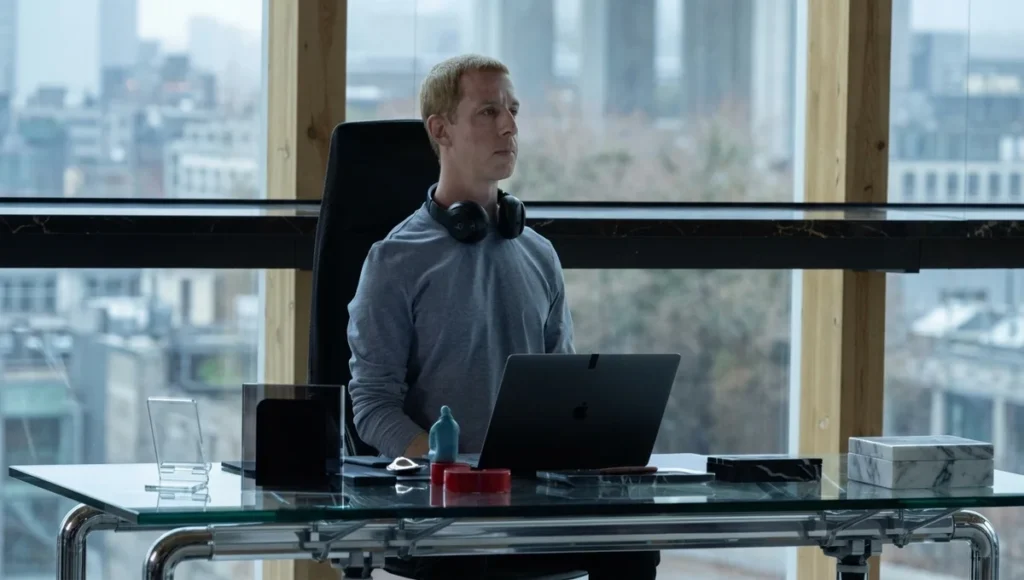
Jeremy Strong plays Mark Zuckerberg in the new film. Jesse Eisenberg played the character in The Social Network.
Strong brings a noticeably different approach. Some critics find his Zuckerberg unsettling and emotionally detached. Others think the performance feels too stylized.
The role also serves a different purpose this time.
Zuckerberg no longer represents the young founder trying to build Facebook. Instead, he represents an established technology empire facing questions about its influence and responsibility.
That shift changes the character’s place in the story. The film focuses less on how Facebook became powerful and more on what happened after it reached that position.
The Five-Year Gap Is Part of the Debate
The Social Reckoning draws from the 2021 Facebook Files. Haugen’s disclosures exposed internal concerns about Facebook’s platforms, algorithms and their effects on users.
Sorkin’s film arrives five years after those events. Critics have already questioned whether that gap hurts the movie’s urgency.
The Boston Globe argued that the material might have felt more immediate several years ago. Wired also questioned whether audiences have already absorbed many of the issues that the film explores.
Other critics see a different problem. The HoloFiles argued that the story remains relevant because concerns about misinformation, hate and social-media influence have not disappeared.
That creates one of the film’s central questions: did The Social Reckoning arrive too late, or does its subject remain important enough to justify another look?
What the First Reviews Agree On
Despite the division, several patterns appear across the early reviews.
The performances are a major strength. White and Madison receive consistent attention, while Strong’s Zuckerberg has also become a talking point.
Sorkin’s dialogue remains important. His fast-paced, argument-driven writing gives the film much of its energy.
The Fincher comparison creates pressure. Critics continue to measure the new film against the style, pacing and character work of The Social Network.
The biggest disagreement concerns urgency. Some reviewers see an important modern warning. Others think the film dramatizes issues audiences have already spent years discussing.
For White, that may be one of the film’s clearest advantages. He brings a recognizable dramatic presence to a story that depends heavily on journalism and investigation rather than spectacle.
What Is Confirmed and What Is Opinion?
Confirmed: The Social Reckoning is written and directed by Aaron Sorkin. The film stars Jeremy Allen White, Mikey Madison and Jeremy Strong. It draws from the events surrounding Haugen’s disclosures and Horwitz’s reporting. Sony has scheduled it for theaters on October 9, 2026.
Confirmed: The film runs approximately 112 minutes and carries an R rating in the United States.
Opinion: Claims about whether the film matches The Social Network, whether Strong’s Zuckerberg works, or whether the story feels timely remain matters of critical judgment.
The early reviews also do not support calling the film either a major failure or an unquestioned success. Audience reactions could change the conversation once the movie reaches theaters.
Frequently Asked Questions
Who does Jeremy Allen White play in The Social Reckoning?
White plays Jeff Horwitz, the Wall Street Journal reporter who worked with Frances Haugen on the Facebook Files investigation.
Is The Social Reckoning a sequel to The Social Network?
The film is described as a companion piece and standalone follow-up. It continues the broader Facebook story several years after the events of the 2010 movie.
Who plays Mark Zuckerberg?
Jeremy Strong plays Zuckerberg, taking over the role from Jesse Eisenberg.
When does The Social Reckoning come out?
The film opens in U.S. theaters on October 9, 2026.
The Verdict So Far
The first reviews point to a film that works better as its own investigative drama than as a direct successor to The Social Network.
Jeremy Allen White and Mikey Madison have emerged as reliable strengths. Sorkin’s dialogue also gives the story momentum. The bigger disagreement centers on the filmmaking around those performances, with some critics finding the movie less stylish and emotionally powerful than Fincher’s original.
That makes the October 9 release particularly interesting. Audiences will soon decide whether Sorkin has found a fresh reason to return to the Facebook story or whether the new film remains too closely tied to the shadow of its predecessor.
Sources / Research Notes: Sony Pictures, Variety, The Atlantic, Associated Press, Screen Daily, The Irish Times, Wired, The Boston Globe, People, Rotten Tomatoes, Metacritic, The HoloFiles.
Read the latest news about Travis Barker Hospital Update: Kourtney Kardashian by His Side

Faizullah Baig
Entertainment & Digital Culture Writer at WordPlay2018
Faizullah Baig is a writer at WordPlay2018 covering entertainment, celebrity news, movies, television, pop culture, and digital trends.
His work focuses on explaining current entertainment stories in a clear and reader-friendly way, with attention to the details behind trending headlines.
Areas of Coverage
Faizullah primarily covers:
Celebrity news and profiles
Movies and television
Entertainment industry developments
Celebrity relationships and public appearances
Trending pop-culture stories
Digital culture and online trends
Editorial Approach
Faizullah aims to distinguish confirmed information from reports, estimates, and speculation. For developing stories, information may be updated as additional reliable details become available.
Articles published under his name are intended to provide readers with useful context rather than simply repeat a headline or social-media claim.
Contact
For corrections, questions, or feedback about an article published under Faizullah Baig’s name, please contact:
Publication: WordPlay2018
Role: Entertainment & Digital Culture Writer